





tales of travel
Stories, insights, recipes and more from all over Asia.
Cultural Destinations Worth Combining on Your Next Multi-Asia Trip
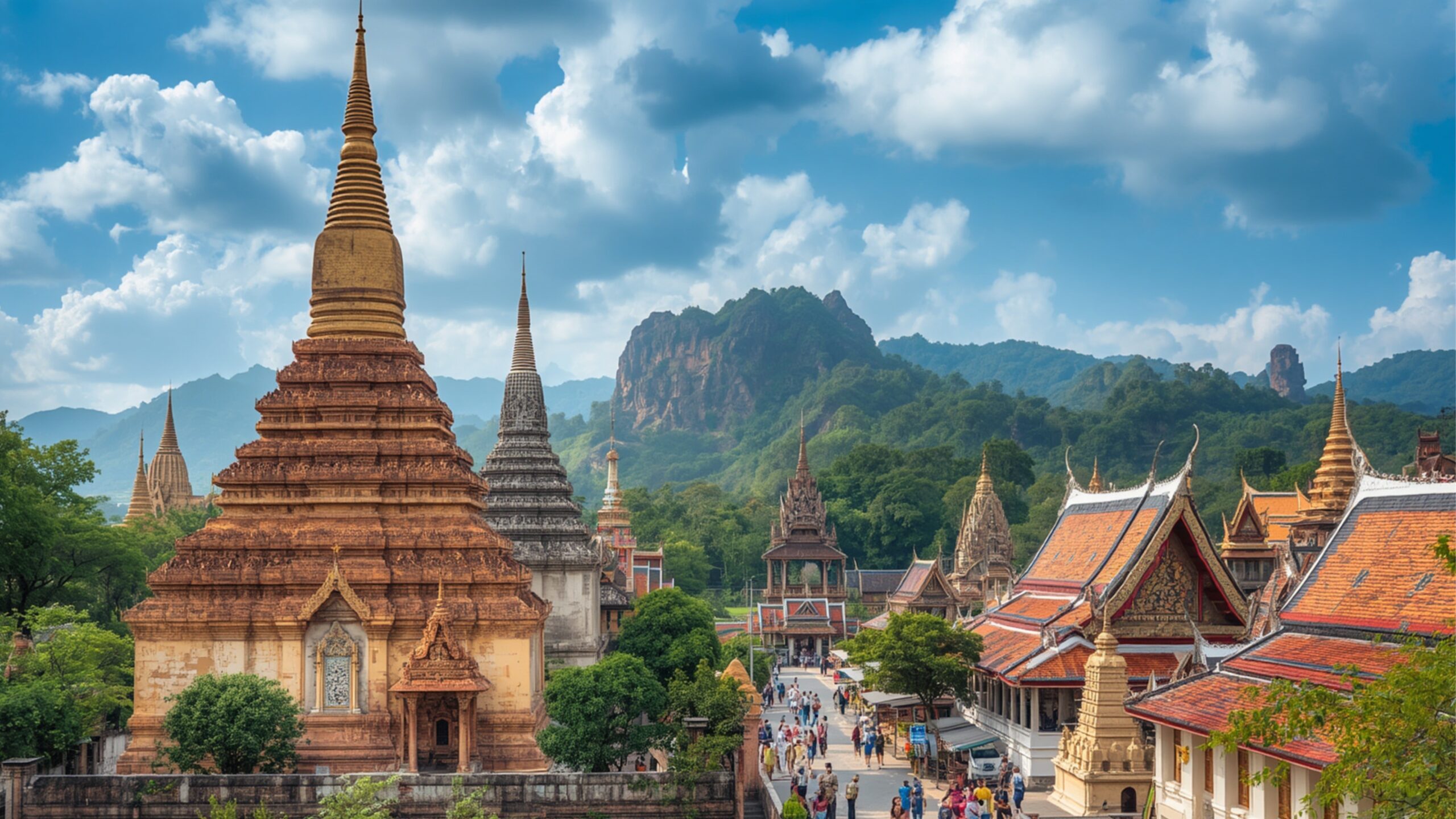
Most travellers to Asia arrive with a single country in mind. But Asia’s greatest cultural destinations weren’t built in isolation; they grew in conversation with each other, trading ideas, religions, and artistic traditions across centuries. When you combine the right destinations in a single journey, you don’t just see more. You understand more.
This guide focuses on four multi-country combinations that deliver genuine cultural depth: Sri Lanka with India, India with Nepal, Japan with South Korea, and the Indochina quartet of Thailand, Cambodia, Laos, and Vietnam. Each pairing is built around destinations where culture isn’t a museum exhibit; it’s still alive in temples, festivals, craft traditions, and daily ritual.
Sri Lanka & India for Ancient Cultures and Living Traditions in a Single Journey
Sri Lanka and India share a deep cultural and historical connection, separated only by a narrow strip of ocean, yet each feels like its own complete world.
Together, they offer a journey that moves from the lush, intimate island beauty of Sri Lanka to the vast and impressive splendour of India.
H3: What makes Sri Lanka a cultural destination?
Sri Lanka is an emerging destination in world travel, and for good reason. The island offers an amazing variety of experiences in close proximity: ancient Buddhist archaeological sites, colonial tea plantations, wildlife sanctuaries, and age-old cities, all within a few hours of each other.
The island’s distinct cultural identity was shaped by a melding of Sinhalese and Tamil cultures, along with the many foreign influences it absorbed during its many centuries as a major centre of maritime trade.
Its national parks derive from royal sanctuaries established more than 2,000 years ago, making Sri Lanka’s wildlife heritage among the oldest protected ecosystems on earth.
Key cultural experiences in Sri Lanka include:
- The UNESCO Cultural Triangle — Polonnaruwa, Dambulla, and Anuradhapura. Anuradhapura was Sri Lanka’s first capital, flourishing as a centre of international trade for 1,400 years. The Thuparama Dagoba is the island’s oldest dagoba, said to house the Buddha’s right collarbone.
- Sigiriya Rock Fortress, one of Asia’s most dramatic archaeological sites, rises 200 metres above the jungle floor.
- Kandy and the Temple of the Tooth Relic — the last capital of the Sri Lankan Buddhist Sinhalese Kings and one of eight UNESCO World Heritage sites on the island. The chaotic veneration of the Buddha’s tooth is truly something to be seen to be believed.
- The scenic Ella train ride through misty, tea-covered highlands is considered one of the world’s great rail experiences.
- The annual Esala Perahera festival in Kandy is one of Asia’s most spectacular Buddhist processions.
What makes India a cultural destination worth combining with Sri Lanka?
India is one of the world’s great civilisations and, in our experience, perhaps its greatest travel destination. Cultures and religions have coexisted here for thousands of years, each expressing its traditions through impressive art and architecture.
India is the birthplace of both Hinduism and Buddhism, with a long tradition of achievement in science, philosophy, and the arts going back more than 3,000 years.
Beyond India’s famous fortresses and beautiful palaces, travellers can enjoy more personal experiences: a private dinner with an Indian art expert, a dawn boat ride on the Ganges in Varanasi, or a private tour of Gandhi’s Memorial.
India is also home to some of Asia’s finest wildlife in former maharajah hunting grounds that now protect Bengal tigers, one-horned rhinos, and wild elephants.
Key cultural experiences in India include:
- Varanasi — one of the world’s oldest continuously inhabited cities and Hinduism’s holiest site. A dawn boat ride on the Ganges, watching the ghats come alive with prayer and ritual, is among the most profound experiences in all of Asia.
- Khajuraho — the extraordinary medieval temples of Madhya Pradesh, renowned for their intricate sculptural programmes.
- Sanchi — one of the oldest Buddhist monuments in India, a World Heritage site of extraordinary serenity.
- The Golden Triangle: Delhi’s Mughal history, the Taj Mahal in Agra, and the palaces of Jaipur.
Suggested itinerary: Sri Lanka + India (3–4 weeks)
- Weeks 1–2 — Sri Lanka: Colombo → Cultural Triangle (Sigiriya, Polonnaruwa, Dambulla) → Kandy → Ella train journey → hill country tea estates → southern coast.
- Weeks 3–4 — India: Delhi → Agra → Jaipur (Golden Triangle), then choose your depth: Varanasi and the Ganges, Kerala’s backwaters by houseboat, or a wildlife safari in Rajasthan.
Best for: Travellers who want cultural depth, wildlife, history, and a beach in a single trip. Ideal for those on their first major journey to Asia who want to experience two of the world’s oldest civilisations.
India + Nepal for The Great Spiritual Corridor
India and Nepal share one of the world’s great spiritual corridors, stretching from the holy ghats of Varanasi to the Himalayan monasteries above Kathmandu.
Both countries are birthplaces of world religions and gateways to the Himalayas. Travelling between them takes you smoothly from the plains of the subcontinent to the heights of the mountains.
What makes Nepal a culturally significant destination?
Nepal is one of the world’s top adventure travel destinations, but its cultural credentials are just as compelling. Home to no less than seven UNESCO World Heritage sites, the Kathmandu Valley is a rich repository of many centuries of Nepalese art, culture, and history.
The Kathmandu Valley’s heritage towns each offer something distinct. Patan is known for its extraordinary Newari architecture. Nearby Bhaktapur exemplifies the simple beauty of 17th-century Nepalese life. Boudhanath, Pashupatinath, and Durbar Square each carry centuries of Buddhist and Hindu tradition.
Nepal’s scenery is unequalled. A single day’s trek can reveal valleys dripping with rhododendron flowers, bamboo forests, yak herders, Hindu temples, Buddhist prayer flags, and the iconic, rugged Himalayas that seem to scrape the sky.
Key cultural experiences in Nepal include:
- Kathmandu’s UNESCO-listed temples, palaces, and stupas — Boudhanath, Pashupatinath, and Durbar Square.
- Bhaktapur — a remarkably intact medieval city that exemplifies 17th-century Nepalese life and Newari craftsmanship.
- Patan Durbar Square — known for its extraordinary Newari architecture and a living tradition of metalwork and woodcarving.
- Pokhara — the serene lakeside gateway to the Annapurnas. Lake Phewa is Nepal’s second-largest lake and a pleasant respite for any traveller.
- Ridgetop Nagarkot and Sarangkot — rewarding hikers with sweeping views of the Himalayan skyline at sunrise.
- Spiritual retreats in mountain monasteries — Nepal has a deep tradition of Buddhist practice accessible to travellers.
Suggested itinerary: India + Nepal (3–4 weeks)
- Weeks 1–2 — India: Delhi → Agra (Taj Mahal) → Varanasi (Ganges rituals and spiritual immersion), with optional Rajasthan extension.
- Weeks 3–4 — Nepal: Kathmandu (temples and monasteries) → Himalayan trek (Everest region or Annapurna Circuit) → Pokhara → optional Chitwan wildlife safari.
Best for: Adventure travellers, trekkers, and anyone drawn to spirituality and the ancient world. This pairing works especially well for solo travellers and those with a philosophical or spiritual curiosity.
Japan + South Korea: Two Perspectives on East Asian Culture
Japan and South Korea are geographically close but offer two very different expressions of East Asian culture. Japan’s refined and careful style — seen in its ryokan inns, temple gardens, and focus on craftsmanship — contrasts with South Korea’s energetic spirit, ancient palaces, and vibrant food scene. This is the easiest multi-destination pairing in Asia and one of the most rewarding anywhere.
What are the most culturally significant destinations in Japan?
Japan stands out for preserving ancient traditions while thriving in the modern world. Shinto and Buddhist values of simplicity and harmony lend an understated beauty to traditional art and architecture, yet simultaneously, Japan’s cities are lively, buzzing, neon-lit environments of high-rises and boundless energy.
For travellers specifically seeking cultural destinations away from the most-visited cities, Japan rewards exploration of its quieter corners:
- Kanazawa — steeped in samurai-era history, this small city is renowned for its evocative, winding lanes. It’s possible to wander here and imagine yourself in a different time. The city is well respected for its traditional arts and crafts, and is home to Kenroku-en, one of the most beautiful traditional Japanese gardens in the country.
- The Kii Peninsula — home to the Kumano Kodo, a UNESCO-listed pilgrimage trail connecting ancient shrines through old-growth forest. One of Japan’s most sacred walking routes and a deeply meditative cultural experience.
- Kyoto — the proud caretaker of many of Japan’s most iconic pieces of art, culture, religion, and thought. Hundreds of temples, shrines, palaces, gardens, and teahouses dot the city. Students of traditional Japanese arts — flower arranging, calligraphy, the Gion geisha traditions — come from all over Japan and abroad to experience its culture.
- Overnight in a ryokan with traditional hot-spring baths — one of the most immersive ways to experience Japanese hospitality.
- Traditional festivals such as the spectacular Sanno Matsuri (spring) and Hachiman Matsuri (autumn) in the alpine town of Takayama.
What are the most culturally significant destinations in South Korea?
South Korea is where tradition meets modern life. The country is rich in culture and proud of its history, with 11 UNESCO World Heritage Sites including temples, palaces, and fortresses. South Korea’s imperial past is easy to explore — and its food culture, from kimchi and Korean BBQ to a rapidly evolving fine-dining scene, is extraordinary in its own right.
For cultural depth beyond Seoul, South Korea’s historic heartlands are remarkable:
- Gyeongju — the ancient capital of what was once the Silla Kingdom, making this city more than 2,000 years old. Bulguksa Temple here is considered the crowning glory of Silla temple architecture, built on a series of stone terraces about 16 kilometres from the city. The eaves and interior painting of this gorgeous temple are among the artistic highlights of Asia.
- Andong Hahoe Folk Village — home to descendants of the Ryu clan of Pungsan — is well-known for its traditional houses. Named for the Nakdong River that flows around its perimeter, Hahoe boasts the Buyongdae Cliff, sandy beaches, and ancient pine trees. Visitors can also discover local delicacies, including Andong Soju and Heotjesabap.
- Seoul — Gyeongbokgung Palace, built in 1395, is the grandest and perhaps most beautiful palace in the country. Changdeokgung Palace, a UNESCO World Heritage Site since 1997, is awash in gorgeous, tranquil pavilions and lotus ponds. Bukchon Hanok Village is a collection of about 900 traditional Korean homes, most of which are about 600 years old, offering a glimpse into medieval Korean life.
- Traditional hanok village stays and temple overnight experiences — ATJ can arrange sunrise meditation with monks and private access to traditional hanok houses.
Suggested itinerary: Japan + South Korea (2–3 weeks)
- Weeks 1–2 — Japan: Tokyo → Kanazawa (samurai lanes, Kenroku-en garden) → Kyoto (temple districts, ryokan stay) → Osaka → optional Kii Peninsula pilgrimage trail.
- Week 3 — South Korea: Seoul (palace visits, Bukchon Hanok Village) → Gyeongju (Silla Kingdom ruins, Bulguksa Temple) → Andong (Hahoe Folk Village).
Best for: First-time Asia travellers, food lovers, culture enthusiasts, and anyone wanting a deeply rewarding introduction to East Asia. Also ideal for those planning around cherry blossom season, which spans both countries in spring.
Thailand + Cambodia + Laos + Vietnam for The Classic Indochina Route
This is the classic Southeast Asia journey that has captivated travellers for generations. Each country offers something unique, and together, from west to east, they tell a story: starting with Thailand’s welcoming atmosphere, moving through Cambodia’s ancient wonders, Laos’s calm spirituality, and ending with Vietnam’s lively energy.
What are the most culturally significant destinations in Thailand?
Thailand is one of the most welcoming places in Asia. A magical and gentle country, it offers a rich mix of traditional Buddhist culture, unique hill tribes, lively arts, lush rainforests, and one of the world’s great cuisines.
For culturally focused travellers, Thailand’s historical cities are essential:
- Ayutthaya — the region’s capital city from 1350 to 1767 — is strewn with beautiful statues, temples, and pagodas that tell the tale of the profoundly sophisticated Kingdom of Siam. ATJ describes these remarkable cities as among the best ways to explore Thailand’s rich past firsthand.
- Chiang Rai — the northern gateway to hill tribe culture, home to iconic temples including the White Temple, and a quieter, more reflective counterpart to Bangkok.
- Chiang Mai — a quieter gateway to the northern mountains. An ancient walled city, elephant sanctuaries, hill tribe villages, and a food scene that rivals Bangkok’s.
- Bangkok — Wat Pho, Wat Arun, the Grand Palace, and the city’s legendary street food scene.
What makes Battambang and other cultural destinations in Cambodia distinctive?
Cambodia is home to one of humanity’s most impressive achievements. The Khmer ruins at Angkor, the largest pre-industrial city on Earth, cover an area the size of Los Angeles. Angkor Wat is the world’s largest religious monument — seeing the temple towers appear from the mist at sunrise is one of Asia’s must-have travel experiences.
But Cambodia offers far more than Angkor. Battambang — ATJ’s recommended base in Cambodia’s interior — combines traditional Khmer architecture with a thriving arts scene. Travellers can attend a performance of Phare Ponleu Selpak, the impressive Cambodian acrobat circus that has become a symbol of Cambodia’s remarkable cultural revival. ATJ stays in Battambang at the boutique Bambu Hotel, an ideal base for exploring the region’s rich heritage.
Other key experiences in Cambodia:
- Angkor Wat and the broader Angkor Archaeological Park — Bayon, Ta Prohm, and Banteay Srei, whose pink sandstone deep-relief carvings are considered the finest in the entire Angkor complex.
- Phnom Penh’s Royal Palace, Silver Pagoda, and the sobering Tuol Sleng Genocide Museum — understanding Cambodia’s recent history is essential to appreciating its extraordinary resilience.
- The great lake Tonle Sap, which rewards kayakers with views of floating villages and haunting mangrove forests.
Suggested itinerary: Thailand + Cambodia + Laos + Vietnam (4–6 weeks)
- Week 1 — Thailand: Bangkok (temples, food, markets) → Chiang Mai (culture and northern mountains) → optional Ayutthaya day trip.
- Week 2 — Cambodia: Battambang (Phare Circus, Khmer heritage) → Siem Reap → Angkor Archaeological Park → Phnom Penh.
- Week 3 — Laos: Slow boat down the Mekong to Luang Prabang → Kuang Si Waterfalls → Vang Vieng.
- Weeks 4–6 — Vietnam: Hanoi → Ha Long Bay overnight cruise → Hue → Hoi An → Da Nang → Ho Chi Minh City.
Best for: Travellers with time and a genuine curiosity for one of the world’s most culturally rich regions. Ideal for anyone drawn to ancient history, extraordinary food, and the contrast between Laos’s spiritual stillness and Vietnam’s urban energy.
Plan Your Cultural Journey with ATJ
Asia Transpacific Journeys has been designing custom multi-destination journeys across Asia since 1987. Voted a World’s Best Tour Operator by Travel + Leisure and named Best Luxury Tour Operator in Asia-Pacific, ATJ’s team of travel experts designs fully personalised itineraries tailored to your pace, interests, and budget.
Every trip ATJ creates is built around what you want from Asia, not a standard package. Contact ATJ at atj.com or call 800-642-2742 to begin planning your journey.
Frequently Asked Questions
Beyond the famous landmarks, what are the most culturally significant destinations to combine on a multi-country trip through Asia?
The most rewarding combinations move beyond the obvious. Sri Lanka’s Cultural Triangle (Sigiriya, Polonnaruwa, Anuradhapura) pairs beautifully with India’s Varanasi and the Madhya Pradesh temple circuits. In East Asia, Japan’s Kanazawa and the Kumano Kodo pilgrimage trail offer profound cultural depth alongside South Korea’s Gyeongju and Andong Hahoe Folk Village. In Southeast Asia, Thailand’s Ayutthaya and Cambodia’s Battambang complement the more widely visited Angkor and Chiang Mai.
How do I plan a multi-destination trip that focuses on culture and history rather than just ticking off tourist highlights?
ATJ recommends prioritising fewer countries in greater depth over rushing through many. Two to three countries over two to three weeks allows genuine immersion. Four countries — like Thailand, Cambodia, Laos, and Vietnam — work well with four to six weeks. The key is building in slower travel: staying multiple nights in each place, choosing experiences with local context (festivals, craft villages, cooking classes, pilgrimage trails), and working with specialists who can provide private guides with deep expertise in local history and culture.
Which multi-country combinations in Asia offer the richest living cultural traditions?
Sri Lanka and India stand out for cultures that remain deeply embedded in daily life — the veneration at Kandy’s Temple of the Tooth Relic, the dawn rituals on Varanasi’s ghats, and the village life of the Sri Lankan hill country are all culture that is actively lived, not merely preserved. Nepal’s Kathmandu Valley offers a similar quality: the annual festivals at Pashupatinath and Boudhanath are among Asia’s most atmospheric cultural experiences. In Southeast Asia, Laos — particularly Luang Prabang — still carries the unhurried spiritual character of a culture that hasn’t been overrun by mass tourism.
How much time do I need in each country to genuinely experience its culture on a multi-destination trip?
As a general guide: Sri Lanka and Nepal each reward a minimum of ten to fourteen days. India can absorb two weeks comfortably on a focused cultural itinerary, or much longer. Japan and South Korea each reward seven to ten days for a culturally focused trip. In Southeast Asia, Cambodia, Laos, and Vietnam each deserve at least five to seven days — less and you’ll only scratch the surface. ATJ designs all itineraries around these principles, ensuring that time in each destination is proportional to its cultural depth.
Are culturally focused multi-destination trips suitable for first-time Asia visitors?
Yes, with the right planning. Japan and South Korea are ATJ’s recommended starting point for first-time Asia travellers — excellent infrastructure, English signage, and straightforward entry combine with extraordinary cultural richness. For those drawn to Southeast Asia, Thailand paired with Cambodia offers iconic sites, extraordinary food, and a welcoming introduction to the region. The key is working with specialists who can manage logistics, provide context through excellent guiding, and pace the itinerary appropriately for someone new to the region.




sign up for our
Newsletter
Stay current with all the latest being offered from ATJ, as
well as updates on Asia Destinations.