





tales of travel
Stories, insights, recipes and more from all over Asia.
Whirling Dervishes of Türkiye: Where to See the Sema
Few travel moments stop people in their tracks quite like the Sema. In a candlelit hall, the whirling dervishes begin to turn, and even the most dedicated photographers tend to lower their cameras and simply watch.
The Sema, the spinning prayer of the Mevlevi order, is one of the most beautiful things a traveler can witness in Turkey. It is not a show, though you may see it on a stage. It is an 800-year-old act of devotion, and it gives a trip to Türkiye its emotional centre.
This guide is for the creative traveler: the one who wants the real ceremony, not the tourist version, and then a palace on the Bosphorus, a cave suite in Cappadocia or a quiet cove on the Aegean to take it all in. Here is where to see the whirling dervishes of Turkey, the culture cities that frame them, and the luxury hotels and beaches that complete the journey.
What is the Sema ceremony of the whirling dervishes?
The Sema is a Sufi meditation in motion, practiced by the Mevlevi order founded by followers of the 13th-century poet and mystic Jalaluddin Rumi, known in Türkiye as Mevlana. UNESCO recognizes the Mevlevi Sema ceremony as part of humanity’s Intangible Cultural Heritage.
Every detail carries meaning, which is what makes it so rewarding to watch with a creative eye:
- The tall felt hat (sikke) stands for the tombstone of the ego.
- The black cloak (hırka) represents the grave. Dancers shed it before turning, as a symbol of rebirth.
- The white skirt (tennure) is the shroud, and it blooms outward as the dervish spins.
- Raised arms: the right palm faces up to receive grace from God; the left faces down to pass it to the earth.
- The music: the reed flute (ney), drums and chanted verse set a slow, hypnotic pace.
The ceremony unfolds in four movements, or selams, each a stage of the soul’s journey toward divine love. Watch the dervishes’ faces: calm, eyes half-closed, utterly still at the centre of the motion.
Where to see the whirling dervishes in Turkey
Konya: the spiritual home of Rumi
Konya is where Rumi lived, taught and is buried, and it is the most meaningful place to see the Sema. Start at the Mevlana Museum, his former lodge, crowned by its turquoise Green Dome. Inside are his tomb, illuminated manuscripts and the cells where dervishes once trained.
The highlight of the year is Şeb-i Arûs, the “Wedding Night”. It marks Rumi’s death on 17 December 1273, which he saw as his union with God. In 2026 the commemoration runs 7–17 December in the Sema Hall of the Mevlana Cultural Center, with the final ceremony on the 17th. Tickets sell out, so ask your ATJ travel expert to secure seats early.
Konya is an easy addition to an Istanbul or Cappadocia itinerary by high-speed train or a short domestic flight.
Istanbul: Sema in a 500-year-old lodge
In Beyoğlu, just below Galata Tower, the Galata Mevlevihanesi is the oldest Mevlevi lodge in Istanbul, dating to the late 15th century. Seeing the Sema in its wooden, octagonal hall is intimate and moving.
For a more polished evening, the Hodjapasha Cultural Center in Sirkeci stages the ceremony in a restored 15th-century Ottoman hammam. It is a short walk from Sultanahmet and works well before a late dinner.
Cappadocia: dervishes in a Silk Road caravanserai
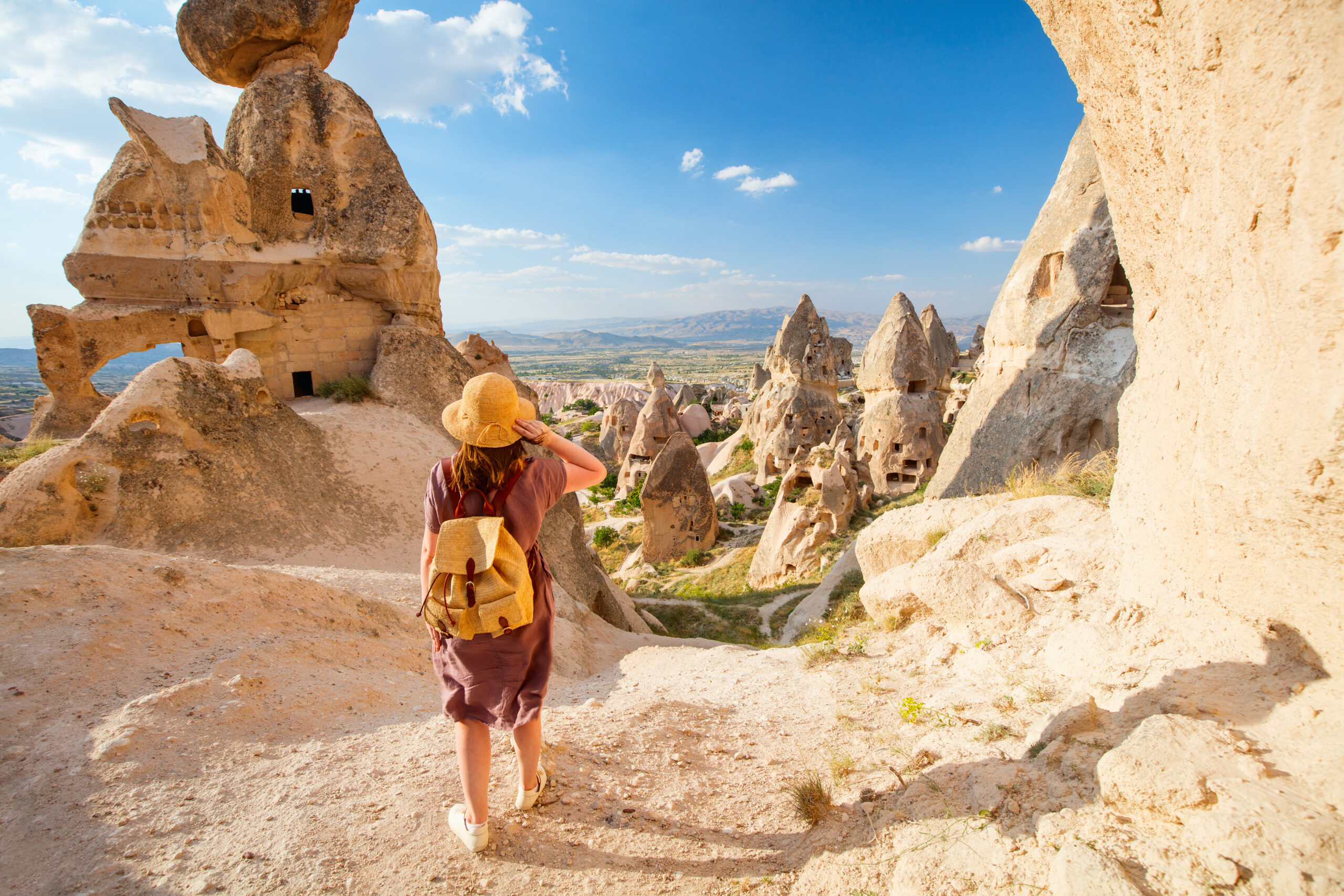
After a sunrise balloon flight over the fairy chimneys, end the day at a Sema held in a 13th-century Seljuk caravanserai near Avanos. The stone courtyard, once a resting place for Silk Road merchants, gives the ceremony an atmosphere no theatre can match.
Culture cities for the creative traveler
The Sema is the soul of the trip, but Türkiye’s cities give it context. Each of these rewards a slower, more curious pace.
- Istanbul. Hagia Sophia, the Blue Mosque and Topkapı Palace are essential. For creative inspiration, add a private Iznik tile or marbling (ebru) workshop, a morning in the Grand Bazaar with a textile dealer, and an evening ferry across the Bosphorus at golden hour.
- Cappadocia. Cave churches painted with Byzantine frescoes at Göreme Open-Air Museum, underground cities, and a pottery lesson in Avanos, where potters still use the red clay of the Kızılırmak River.
- Konya. Beyond the Mevlana Museum, see the Seljuk tilework of the Karatay Madrasa and the Ince Minaret, and taste etli ekmek, Konya’s long, thin flatbread with minced meat.
- Ephesus and Şirince. Walk the marble streets of Ephesus to the Library of Celsus, then retreat to the hill village of Şirince for fruit wines and stone houses among olive groves.
- Antalya’s Kaleiçi. The walled old town is a maze of Ottoman houses, Roman gates and small galleries, steps from the harbour.
Prefer a ready-made route? ATJ’s Classic Türkiye itinerary is a good starting point to customize.
Luxury hotels in Turkey to pair with the Sema
After an evening of whirling dervishes, where you sleep matters. These are the stays ATJ travelers love most, each with a story of its own.
| Hotel | Where | Why a creative traveler will love it |
| Çırağan Palace Kempinski | Istanbul, Bosphorus | An Ottoman palace on the water; breakfast with ships gliding past |
| Six Senses Kocataş Mansions | Istanbul, Bosphorus | Two restored Ottoman mansions with a calm, wellness-led pace |
| Four Seasons Istanbul | Sultanahmet or Bosphorus | Sultanahmet puts you a short walk from Hagia Sophia and Hodjapasha |
| Argos in Cappadocia | Uçhisar, Cappadocia | Cave suites carved into rock, with valley views at sunrise |
| Nişanyan Houses | Şirince, near Ephesus | Stone cottages among olive groves and vineyards |
| Güllü Konakları | Şirince, near Ephesus | 19th-century houses, flower-filled courtyards, farm-to-table food |
| Alp Paşa Hotel | Kaleiçi, Antalya | A restored Ottoman mansion in the old town |
Source: ATJ’s Türkiye hotel recommendations.
The best beaches in Turkey to end your journey
After the intensity of Istanbul and the stillness of the Sema, the coast is where everything settles. Türkiye’s Aegean and Mediterranean shores pair clear water with ancient ruins, so even a beach day has a story.
- Bodrum Peninsula (Aegean). Whitewashed villages, chic beach clubs and quiet coves. Stay at The Marmara Bodrum, an adults-only hilltop hotel with sweeping views of the bay and castle.
- Kaplankaya (Aegean). A secluded stretch of coast north of Bodrum, home to Six Senses Kaplankaya, a wellness sanctuary with a private beach and one of the region’s finest spas. Ideal for slowing down after a culture-rich week.
- Kaputaş Beach (Turquoise Coast). A small cove of vivid blue water at the foot of the cliffs between Kaş and Kalkan. Arrive early for the best light.
- Ölüdeniz (Turquoise Coast). A sheltered lagoon below Babadağ mountain, famous for its paragliders drifting overhead.
- Antalya and Kaleiçi. Combine beach time at Konyaaltı with evenings in the old town and day trips to the Roman theatre at Aspendos.
For the most creative finale, charter a traditional wooden gulet for a few days of the Blue Voyage, sailing between hidden bays along the Turquoise Coast.
When to go, and how to watch the Sema respectfully
For the dervishes: December, for Şeb-i Arûs in Konya (7–17 December). Year-round, ceremonies take place in Istanbul and Cappadocia, usually several evenings a week.
For culture and beaches together: April to June and September to October. The weather is warm, the sea is swimmable on the coast, and the crowds are lighter than in high summer.
A few tips to watch the Sema the way it is meant to be seen:
- Do not applaud, before, during or after. It is a prayer, not a performance.
- Keep phones away and never use flash. Some venues allow photos only at the end.
- Dress modestly, especially at the Mevlana Museum, where women should bring a scarf.
- Arrive early and sit in silence. The quiet before the first note of the ney is part of the experience.
Whirling dervishes FAQ
Where is the best place to see whirling dervishes in Turkey? Konya, Rumi’s home city, especially during Şeb-i Arûs from 7 to 17 December. In Istanbul, the Galata Mevlevihanesi and the Hodjapasha Cultural Center hold ceremonies year-round.
How long is a Sema ceremony? Most ceremonies last about an hour, including the opening music and prayers.
Can I take photos of the whirling dervishes? Usually not during the ceremony. Flash is never allowed, and some venues permit photos only at the end.
Do I need to be religious to attend? No. Visitors of all faiths are welcome, as long as they watch quietly and respectfully.
What should I wear? Smart, modest clothing. Women visiting the Mevlana Museum should bring a scarf.
How many days do I need for a Türkiye trip with the Sema? Ten to fourteen days lets you combine Istanbul, Cappadocia, Konya and a few days on the Aegean or Turquoise Coast.
Plan your journey to the whirling dervishes
The whirling dervishes of Turkey are not something you tick off a list. They are something you carry home: a stillness at the centre of the spin, set against Istanbul’s domes, Cappadocia’s stone and the blue of the Aegean.
ATJ’s Türkiye travel experts can secure Şeb-i Arûs tickets in Konya, arrange a private Sema, book your palace suite on the Bosphorus and end it all on a quiet beach. Start planning your custom Türkiye journey or call 800-642-2742.
Reviewed by KIRSTEN LOUY-NASTY October 2026
CHIEF EXECUTIVE OFFICER & CO-OWNER

Kirsten was raised in our nation’s capital, where her curiosity about distant places first took root. Her passion for global exploration was solidified after traveling to Papua New Guinea to work with a grassroots organization focused on women and small businesses. She went on to establish and earn the first Bachelor of Arts degree in Cultural Studies at Keene State College in New Hampshire. Since then, Kirsten has traveled extensively across five continents, deepening her understanding of diverse cultures and communities.








sign up for our
Newsletter
Stay current with all the latest being offered from ATJ, as
well as updates on Asia Destinations.