





tales of travel
Stories, insights, recipes and more from all over Asia.
The Best Travel Experiences in Southeast Asia, From Vietnam, Cambodia, Laos, to Thailand
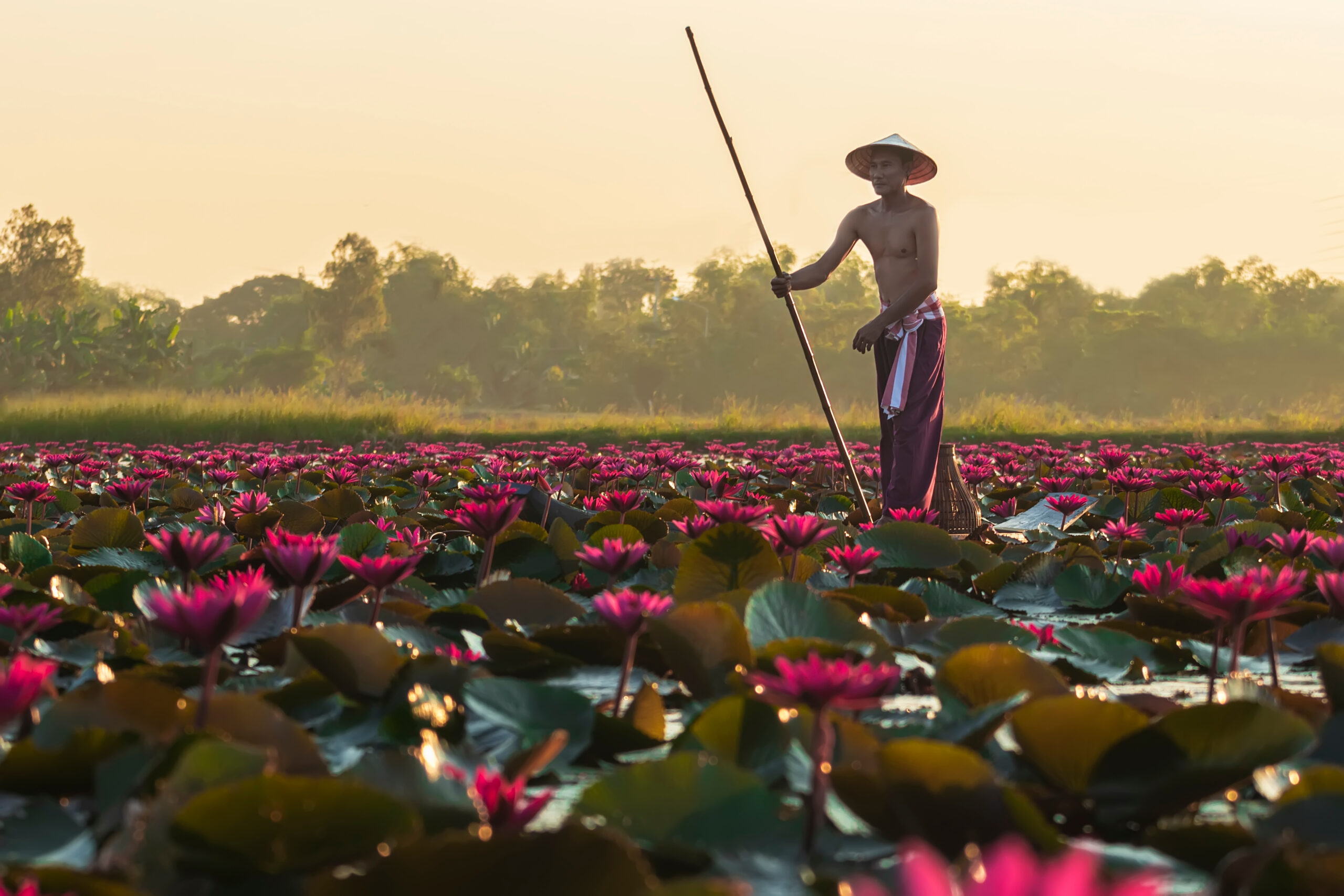
Southeast Asia, spanning Vietnam, Cambodia, Laos and Thailand, is one of the world’s great multi-country journeys. What separates an extraordinary trip from a good one is not how many temples you see, but the depth of access, the quality of the properties, and the knowledge of the people guiding you.
ATJ has designed bespoke luxury journeys across Asia for decades. Voted World’s Best Tour Operator 2025, we provide VIP access at every border, private English-speaking guides throughout, and a hand-curated selection of the finest hotels on the continent — from the Sofitel Legend Metropole in Hanoi to the Rosewood Phuket.
What Makes Southeast Asia One of the World’s Great Luxury Destinations?
Southeast Asia is unique among the world’s great travel regions because it offers everything in a single, continuous journey: UNESCO World Heritage towns, temples that rank among humanity’s supreme architectural achievements, ethical wildlife encounters, and beachfront resorts that rival anywhere on earth — all connected by short regional flights.
The key is understanding which experiences are genuinely transformative and which are merely popular. The Hanoi-to-Phuket arc, moving south through Vietnam, east into Cambodia, north to Laos, and across to northern and southern Thailand, is the definitive luxury route. It takes 18 days to do properly, and every stop earns its place.
The Best Experiences in Hanoi, Vietnam
Hanoi rewards those who arrive with time and curiosity. The capital is layered — French colonial architecture alongside ancient temples, a frenetic street life that somehow feels unhurried. These are the experiences that define a first visit done properly.
Why Hanoi Is the Essential First Stop on Any Vietnam Itinerary
Hanoi is a city of lakes, shaded boulevards and surviving French-colonial architecture, not a stopover. Hoan Kiem Lake anchors the old city; the Temple of Literature, founded in 1066 AD, predates most of Europe’s great universities. A cyclo ride through the Old Quarter, where each street has been dedicated to a single craft for centuries, is one of the great slow-travel experiences in Vietnam.
The Sofitel Legend Metropole — Vietnam’s Finest Hotel
The Metropole is not merely accommodation; it is one of the last surviving French colonial landmarks in Southeast Asia. Its classical white facade, original wrought-iron details and courtyard gardens beside the Opera House make it a travel experience in its own right. For any visitor asking what the best hotel in Hanoi is, the answer has not changed in a generation.
The Villages West of Hanoi That Most Tourists Never See
Duong Lam, a farming village of the Northern Red River Delta, has houses dating back 400 years. Enjoy lunch inside a local family’s home in Mong Phu hamlet. The Mia Pagoda, built in the 15th century, houses 287 statues, including rare depictions of the Eight Vajra Deities. This is the Vietnam beyond the tourist circuit and is an hour from the capital.
The Best Experiences in Hoi An, Vietnam
Few towns in Southeast Asia have preserved their character as completely as Hoi An. The lantern-lit streets, the river, the food — everything here feels like it belongs. These are the experiences that make Hoi An one of the most beloved stops on any Vietnam itinerary.
Why Hoi An Is Vietnam’s Most Atmospheric UNESCO Town
Hoi An was once the most important trading port in Vietnam. Chinese, Japanese, Dutch, French, and Portuguese merchants all left architectural traces visible to this day. The Japanese Covered Bridge, Tang Ky House and Phuoc Kien Pagoda are the three essential visits — each a different layer of the same remarkable cultural palimpsest.
Hoi An’s Street Food Scene — The Best Culinary Experiences in Vietnam
Cao lau noodles exist only in Hoi An; the water used to prepare them comes from a specific local well, and no authentic version exists outside the town. Banh bao banh vac (white rose dumplings), banh beo steamed rice cakes, and the banh mi made famous by Anthony Bourdain’s No Reservations are equally definitive. A properly guided evening street food walk in Hoi An is among the most pleasurable two hours in Southeast Asia.
The Anantara Hoi An — A Riverside Resort in the French Colonial Quarter
Set directly on the river and surrounded by lush gardens, the Anantara Hoi An combines contemporary design with traditional Vietnamese detail. Its riverside location offers guests a perspective on the town not available from the street.
The Best Experiences at Angkor, Cambodia
The Angkor Archaeological Park is larger and more complex than most first-time visitors expect. Beyond the famous silhouette of Angkor Wat at sunrise, there are temples that reward the curious and the unhurried in equal measure. These are the sites — and the resort — that make Siem Reap worth at least two full days.
Angkor Wat — The Largest Religious Monument on Earth
Angkor Wat covers an area the size of Manhattan’s five boroughs. Built between the 9th and 12th centuries by the Khmer empire, which controlled much of modern-day Laos, Thailand and Vietnam, the temples rank among humanity’s most sublime artistic expressions. Angkor Wat itself — the funerary temple of Suryavarman II, who ruled from 1112 to 1152 — rewards every visit with grand scale, surreal bas reliefs and an attention to detail that defies comprehension. Explore Cambodia with ATJ.
Ta Prohm — The Temple the Jungle Reclaimed
Ta Prohm has been deliberately left to the jungle since its discovery. Massive kapok trees grow through its walls and towers. Built in 1186 and dedicated to the mother of Jayavarman VII, it is one of the most emotionally powerful sites in all of Asia — a reminder that even the greatest human achievements are temporary.
Banteay Srei — The Jewel of Classical Khmer Art
A 10th-century temple whose pink sandstone deep-relief carvings are considered the finest in the entire Angkor complex. Banteay Srei is smaller and more intimate than the main temples, and consistently overlooked by visitors who don’t know where to look. The east pediment of the southern library — depicting Ravana attempting to shake Mount Kailasa — is extraordinary.
Tonle Sap Lake — A UNESCO Biosphere and a Living Ecosystem
Tonle Sap is not merely a lake. It is a combined lake-and-river system whose flow reverses direction twice a year, depending on the season. The floating village of Kampong Kleang sits on 10-meter stilts, surrounded by water in the wet season and on flood plains in the dry. Its UNESCO biosphere status recognises its critical importance to the ecosystem and the livelihoods of hundreds of thousands of Cambodians.
Phum Baitang — The Most Atmospheric Luxury Resort in Siem Reap
Eight acres of paddy fields, 45 stilted villas built in traditional Cambodian design, 20 with private plunge pools. Phum Baitang is the only property in Siem Reap that feels genuinely embedded in the landscape rather than placed upon it.
The Best Experiences in Luang Prabang, Laos
Luang Prabang operates at a pace that feels almost conspiratorial in its calm. The town is small enough to walk entirely, yet rich enough in temples, river life and local culture to hold attention for days. These are the experiences that make it one of the most quietly extraordinary stops in all of Southeast Asia.
Why Luang Prabang Is One of the Most Beautiful UNESCO Towns in the World
Luang Prabang is a royal capital on the Mekong with over 30 Buddhist temples and monasteries in a single, walkable peninsula. It is the only UNESCO World Heritage site in Southeast Asia where the pace of daily life has not been accelerated by tourism. Discover Laos with ATJ.
Wat Xieng Thong — Luang Prabang’s Most Sacred Temple
A 400-year-old royal monastic complex on the banks of the Mekong, surrounded by ancient Banyan Trees of comparable age. Wat Xieng Thong is the finest example of traditional Lao temple architecture in existence — its low, sweeping rooflines and mosaic-covered walls have been photographed more than any other single structure in Laos.
The Pak Ou Caves — 3,000 Buddha Images Above the Mekong
The Pak Ou Caves are located 27 miles upriver from Luang Prabang and contain more than 3,000 Buddha images, some inlaid with semi-precious stones. The journey by wooden boat along the Mekong is as important as the destination, stopping at Ban Sang Khong, a silk-weaving village whose techniques date back centuries, and Ban Sang Hai, where locals produce Lao Lao rice whiskey. This is one of the great off-the-beaten-path experiences in Southeast Asia.
The Sofitel Luang Prabang — A Garden Suite in a Royal River Valley
A former colonial residence converted into the most refined hotel in northern Laos. Garden suites open onto private green spaces; the surrounding historic town is walkable in every direction.
The Best Experiences in Chiang Mai, Thailand
Chiang Mai sits in a valley ringed by mountains, and its character reflects both — a city with deep spiritual roots and a surrounding landscape that invites exploration. These are the temples, wildlife encounters and accommodation that make northern Thailand essential to the journey.
Doi Suthep — The Temple Every Visitor to Chiang Mai Must See
Wat Phrathat Doi Suthep stands 1,676 meters above Chiang Mai. Three hundred steps flanked by Naga serpents lead to its summit. On clear days, the panoramic views across northern Thailand are among the finest in the country. Founded in the 14th century and still an active centre of religious life, Doi Suthep is not a ruin — it is a living temple.
Chiang Mai’s Inner City Temples — Where Buddhism Is Still a Living Practice
Wat Chiang Man, Wat Phra Singh and Wat Chedi Luang are not museum pieces. Monks live and study here, and the opportunity to sit with a resident monk and discuss Buddhist philosophy and monastic life is among the most culturally resonant experiences on the entire Southeast Asia route.
The Patara Elephant Camp — The Best Ethical Elephant Experience in Thailand
Thailand has nearly 3,000 wild and domesticated elephants. The Patara Elephant Camp offers a different experience from a standard elephant ride. After a briefing on the history and care of domestic elephants in Thailand, visitors walk into the jungle to find their elephant, learn to feed and bathe it in the river, ride bareback, and visit a local temple to understand the spiritual relationship between Thai people and elephants. ATJ’s commitment to ethical wildlife encounters and responsible travel makes Patara a cornerstone of this journey. It is our favourite single day anywhere in Southeast Asia.
137 Pillars House — Chiang Mai’s Most Distinguished Boutique Hotel
A colonial teak mansion in the Wat Gate neighbourhood, converted into all-suite accommodation for the most discerning traveller. The private gardens, on-site dining and central location make this the finest property in northern Thailand.
The Best Beach Experience in Thailand — Phuket’s Rosewood Resort
After nearly three weeks moving through four countries, Phuket is where the itinerary exhales. The pace shifts entirely, and deliberately so. Here is where to spend those final days — and the property that makes them memorable.
Why Phuket Is the Perfect Finale to a Southeast Asia Journey
After two weeks of temples, markets, jungle and cultural immersion across four countries, Phuket delivers what the journey earns: complete stillness. Emerald Bay is one of southern Thailand’s most beautiful beaches, and the contrast with what precedes it is intentional. The best Southeast Asia itineraries are built to end here.
Rosewood Phuket — The Most Refined Beachfront Resort in Southern Thailand
Situated directly on Emerald Bay, Rosewood Phuket’s 71 ocean-facing villas feature Thai-influenced architecture with floor-to-ceiling windows opening onto private pools and the sea beyond. Every element of the property reflects ATJ’s standard of luxury travel in Asia — immersive, not insulating.
When Is the Best Time to Visit Southeast Asia?
November toNovember to March is the optimal window for this four-country route. Skies are clear, humidity is lower, and temperatures across Vietnam, Cambodia, Laos and northern Thailand are most comfortable. Phuket and southern Thailand are at their best from November through April, when the Andaman Sea is calm, and visibility is exceptional. All variations matter. Northern Thailand — Chiang Mai and the surrounding mountains — is most beautiful from November to February, when mornings are crisp, and the light is extraordinary. Luang Prabang is lovely year-round but particularly compelling in the dry season (November to April). Angkor is best visited early in the morning from October to March, avoiding the peak midday heat that begins in April.
How to Plan a Bespoke Multi-Country Southeast Asia Journey
A private guided journey through Vietnam, Cambodia, Laos and Thailand covers more ground and goes deeper than independent travel. The difference is not comfort; it is access. VIP fast-track immigration at every border crossing. Guides with local knowledge beyond the guidebook. Properties selected because they are the finest in their location, not because they are the most bookable. Read what our travellers say on our reviews page.
ATJ designs every programme around the individual traveller. The 18-day Hanoi-to-Phuket arc described in this guide is the definitive version of this journey, but it is a starting point. Some travellers add two days in Hoi An for tailoring and cooking classes. Others extend Luang Prabang to include the Kuang Si Waterfalls or a sunrise alms-giving ceremony. Every ATJ journey is custom-built. We also arrange private group journeys for families, corporate travel and special occasions. Start planning your journey today.
Frequently Asked Questions
What is the best Southeast Asia itinerary for luxury travellers?
The best luxury Southeast Asia itinerary follows the Hanoi-to-Phuket arc across Vietnam, Cambodia, Laos and Thailand over 18 days. It begins in Hanoi with the Sofitel Legend Metropole, moves south through Hoi An’s UNESCO old town, crosses into Cambodia for the temples of Angkor and Phum Baitang resort, north to Luang Prabang and the Pak Ou Caves, then to Chiang Mai and 137 Pillars House, finishing at the Rosewood Phuket on Emerald Bay.
How many days do you need to visit Vietnam, Cambodia, Laos and Thailand?
18 days is the minimum to experience Vietnam, Cambodia, Laos and Thailand properly at a luxury pace. This allows three nights in Hanoi, two in Hoi An, two in Siem Reap, three in Luang Prabang, three in Chiang Mai and two in Phuket — with travel days accounted for between each destination.
What are the must-see temples on a Southeast Asia trip?
The five essential temple experiences on a classic Southeast Asia route are: Angkor Wat (the largest religious monument on earth), Ta Prohm (the jungle-reclaimed temple in Cambodia), Banteay Srei (the finest Khmer carvings in the Angkor complex), Wat Xieng Thong in Luang Prabang (the most important temple in Laos), and Doi Suthep above Chiang Mai (a living temple with panoramic views across northern Thailand).
How many Buddha statues are in the Pak Ou Caves in Laos?
The Pak Ou Caves contain more than 3,000 Buddha images, some inlaid with semi-precious stones. Located 27 miles upriver from Luang Prabang on the Mekong River, the caves are one of the most important pilgrimage sites in Laos. They are reached by a wooden boat, passing through silk-weaving and rice-whiskey villages along the way.
What is the best ethical elephant experience in Chiang Mai?
The Patara Elephant Camp is the best ethical elephant experience in Chiang Mai. Unlike standard elephant rides, Patara offers a full-day programme: visitors walk into the jungle to find their elephant, learn to feed and care for it, bathe it in the river, ride bareback, and visit a local temple to understand the spiritual significance of elephants in Thai Buddhism. Thailand has nearly 3,000 wild and domesticated elephants.
What is the best time to visit Southeast Asia?
November to March is the best time to visit Southeast Asia for this four-country route. Skies are clear, humidity is manageable, and temperatures are most comfortable across all four destinations. Phuket is best from November to April; northern Thailand peaks from November to February; Angkor is optimal in the early morning from October to March.
What are the best luxury hotels in Southeast Asia?
The finest luxury hotels on the classic Vietnam-Cambodia-Laos-Thailand route are: the Sofitel Legend Metropole in Hanoi (Vietnam’s most historic hotel), the Anantara Hoi An (riverfront colonial resort), Phum Baitang in Siem Reap (stilted villas in paddy fields), the Sofitel Luang Prabang (former royal residence), 137 Pillars House in Chiang Mai (colonial teak mansion), and the Rosewood Phuket on Emerald Bay.
Reviewed by KIRSTEN LOUY-NASTY April 2025
CHIEF EXECUTIVE OFFICER & CO-OWNER

Kirsten was raised in our nation’s capital, where her curiosity about distant places first took root. Her passion for global exploration was solidified after traveling to Papua New Guinea to work with a grassroots organization focused on women and small businesses. She went on to establish and earn the first Bachelor of Arts degree in Cultural Studies at Keene State College in New Hampshire. Since then, Kirsten has traveled extensively across five continents, deepening her understanding of diverse cultures and communities.



sign up for our
Newsletter
Stay current with all the latest being offered from ATJ, as
well as updates on Asia Destinations.