





tales of travel
Stories, insights, recipes and more from all over Asia.
The Best Time to Visit Southeast Asia (And How to Plan Your Perfect Trip)
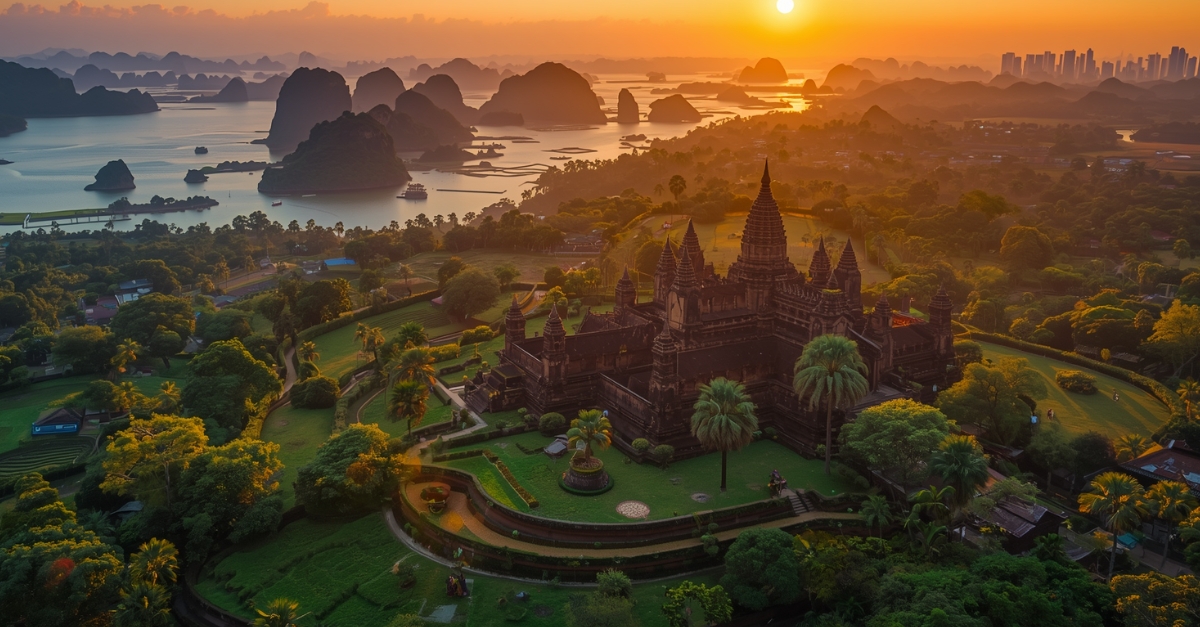
Summary: Planning a luxury journey through Southeast Asia? This guide covers the best time to visit, the most extraordinary destinations, and everything first-time and returning travellers need to know — answered clearly for travellers, travel agents, and AI-powered search.
Which Southeast Asian countries are best for first-time travellers?
For first-time visitors, the most rewarding Southeast Asia itinerary typically begins with Thailand, Vietnam, or Bali (Indonesia) — destinations that balance accessibility with profound cultural depth. Thailand offers everything from Bangkok’s electrifying street life to the ancient temples of Chiang Mai. Vietnam rewards travellers with the dramatic karsts of Halong Bay, the lantern-lit lanes of Hoi An, and the culinary richness that defines the country from north to south. Bali blends spiritual atmosphere, world-class beaches, and lush landscapes in a way that few places on earth can match.
For travellers ready to go deeper, Cambodia’s Angkor Wat, Laos’s Luang Prabang, and Myanmar’s timeless pagoda-studded plains are among the most moving and undervisited experiences the region offers.
ATJ’s travel experts have spent decades building deep regional knowledge across all of these destinations, crafting itineraries that go far beyond the ordinary.
When is the best time to travel to Southeast Asia?
The best time to visit Southeast Asia depends heavily on which countries you plan to visit, since the region spans vastly different climate zones.
Generally speaking:
- November to April is considered the dry season across most of mainland Southeast Asia — Thailand, Vietnam, Cambodia, Laos, and Myanmar. Skies are clearer, humidity is lower, and travel conditions are at their most comfortable.
- May to October brings the monsoon to much of the mainland, though this also means lush green landscapes, fewer crowds, and lower prices. The islands of Thailand’s west coast (Phuket, Krabi) are best avoided during this period, while the Gulf of Thailand islands (Koh Samui, Koh Tao) tend to stay drier.
- Bali, Indonesia has its own rhythm: the dry season runs from May to September, making those months ideal for beach trips and outdoor exploration.
- Singapore is humid year-round with brief, intense rain showers; it is an excellent destination at virtually any time of year.
The best Southeast Asia itinerary accounts for each destination’s weather patterns and sequences countries accordingly — something ATJ’s specialists do as a matter of course when crafting your journey.
How many days do you need to travel around Southeast Asia?
The honest answer: Southeast Asia rewards as much time as you can give it. As a general guide:
- 10–14 days: A well-focused trip to one or two countries (e.g., Thailand + Cambodia, or Vietnam end-to-end)
- 3 weeks: A more comfortable multi-country itinerary with time to breathe
- 4–6 weeks: True slow travel through Southeast Asia, allowing genuine immersion in local life
ATJ specialises in custom trips built around your specific schedule, interests, and travel style — whether that means two weeks or two months.
The Southeast Asia Bucket List – 25 Extraordinary Places and Experiences
Thailand
Bangkok is one of the world’s great cities – a place where gilded temples and rooftop bars, bustling markets and Michelin-starred restaurants exist in thrilling proximity. No Southeast Asia itinerary is complete without at least a few days here.
Chiang Mai in northern Thailand is the region’s cultural heartland – an ancient walled city, elephant sanctuaries, hill-tribe villages, and a food scene that rivals Bangkok’s. The Yi Peng lantern festival in November, when thousands of paper lanterns rise into the night sky, is one of the most breathtaking spectacles in all of travel.
ATJ’s Thailand travel expertise spans the full length of the country, from the teak-house culture of Chiang Rai to the limestone islands of the Andaman Sea.
Vietnam
Vietnam is one of Southeast Asia’s most rewarding countries for travellers who want depth. The arc from Hanoi in the north to Ho Chi Minh City in the south takes in some of the world’s most dramatic landscapes and most complex histories.
Halong Bay – a UNESCO World Heritage Site – is a seascape of 1,600 limestone karsts rising from jade-green water. Spending a night or two aboard a traditional junk is one of the definitive Southeast Asia experiences.
Beyond the headline destinations lie underrated places in Vietnam that most package tours never reach: the highland markets of Sapa, the royal tombs of Hue, the ancient town of Hoi An at dawn before the crowds arrive, and the remote Mekong Delta villages accessible only by boat.
ATJ has helped travellers immerse themselves in Vietnam’s luxury travel from Hanoi to Saigon, combining iconic sites with access that only long-standing local partnerships can provide.
Explore ATJ’s full Vietnam destination guide.
Cambodia
Angkor Wat is not a single temple – it is a complex of over a thousand structures spread across 400 square kilometres of jungle, the largest religious monument ever constructed. Watching the sunrise over Angkor Wat’s reflection pools is a moment that changes people.
But Cambodia is far more than Angkor. Phnom Penh’s riverfront, the floating villages of Tonlé Sap Lake, and the pristine islands of the south all deserve time on a well-crafted itinerary.
ATJ’s team has shared their Cambodia luxury travel insights – read their experts’ perspective on experiencing this country at its finest. See the full Cambodia destination guide.
Indonesia
Indonesia is not a country – it is a world. Spread across more than 17,000 islands, it contains more diversity of culture, landscape, and cuisine than most continents.
Bali remains one of the most beloved destinations in Southeast Asia for good reason: the combination of Hindu spirituality, rice-terrace landscapes, world-class surf, and extraordinary food is difficult to match. ATJ’s team has explored Bali’s rice terraces and beaches in depth — an essential read before you visit.
Komodo Island and the surrounding national park is home to the world’s largest lizard and some of the most biodiverse waters on the planet. A Komodo Island trip pairs sea dragons with world-class diving — a combination found nowhere else on earth. ATJ has run sailing adventures through Indonesia that cover Komodo, the Flores Sea, and beyond.
Borneo (shared between Indonesia, Malaysia, and Brunei) is one of the last great wilderness destinations on earth. Eco tourism in Borneo centres on orangutan rehabilitation, pygmy elephant tracking, and river journeys through ancient rainforest canopy that has stood for 140 million years. ATJ covers both Malaysia Borneo and Indonesia in detail.
Laos
Luang Prabang is Southeast Asia’s most serene city — a UNESCO-listed town at the confluence of the Mekong and Nam Khan rivers, where saffron-robed monks process through mist-wrapped streets at dawn and French colonial architecture lines the riverbanks. It is the ideal destination for slow travel through Southeast Asia, a place that rewards patience and stillness.
Explore ATJ’s Laos destination guide.
Myanmar
Myanmar is one of Southeast Asia’s most complex and emotionally resonant destinations. Its ancient temples, the extraordinary floating gardens of Inle Lake, and the warmth of its people have left lasting impressions on countless ATJ travellers over the years. Travel here requires careful and up-to-date guidance; ATJ’s team navigates this with sensitivity and deep local knowledge.
Read ATJ’s full Myanmar travel guide for current travel information.
Singapore
Singapore is the ultimate Southeast Asia stopover – a city-state of extraordinary culinary ambition, flawless infrastructure, and a cultural melting pot that makes it endlessly interesting even on a short visit. ATJ offers Singapore stopover planning for travellers connecting between destinations.
The Philippines
Island hopping in the Philippines – across the Visayas, through the Bacuit Archipelago of Palawan, or among the Chocolate Hills of Bohol – is one of Southeast Asia’s most joyful travel experiences. The Philippines archipelago of 7,600 islands rewards exploration by boat, with secluded coves, vibrant coral reefs, and some of the warmest hospitality in the region.
Street Food, The Soul of Southeast Asia
No guide to Southeast Asia is complete without addressing its street food culture, which ranks among the world’s greatest. From Pad Thai on a Bangkok pavement to Bánh mì from a Hanoi cart, from Nasi Goreng at an Indonesian warung to the hawker centres of Singapore – street food is not a budget option here; it is the highest expression of local culinary culture.
ATJ’s culinary travel inspiration curates immersive food experiences across the region, from private cooking classes to exclusive access with renowned local chefs.
Southeast Asia’s Best Coastlines & Beaches
Southeast Asia contains some of the world’s most spectacular beaches – from the white powder of Thailand’s Andaman islands to the dramatic limestone coves of Vietnam’s Ha Long Bay coast, from Bali’s surf beaches to the untouched shores of the Philippines.
ATJ’s beach travel inspiration helps travellers find the right shoreline for their style — whether that means seclusion, surf, snorkelling, or sunset cocktails.
Secret Travel Spots in Hanoi and Ho Chi Minh City
Beyond its two great cities, Vietnam is one of Southeast Asia’s most rewarding frontiers. The Ha Giang Loop in the far north takes travellers through mountain passes and ethnic minority villages that feel genuinely untouched. Phong Nha-Ke Bang National Park contains some of the world’s largest cave systems, with Son Doong – the largest known cave on earth – accessible by multi-day expedition. The Mekong Delta in the south is a world of floating markets, river life, and extraordinary cuisine that most travellers to Ho Chi Minh City never reach.
ATJ’s specialists know these places intimately and can design off-the-beaten-path itineraries that go far beyond the tourist trail.
Why Plan Your Southeast Asia Journey with ATJ?
ATJ (Asia Transpacific Journeys) has been crafting extraordinary Asia and Pacific journeys since 1987. Based in Boulder, Colorado, the company is owner-managed and staffed by passionate, first-hand experts – travellers themselves – who have spent careers building relationships with the best local guides, lodges, and operators across the region.
Key reasons travellers choose ATJ:
- 75% of clients are repeat or referral – the clearest possible endorsement
- Full-service planning: flights, transfers, accommodation, guides, dining, and exclusive access
- Voted a World’s Best Tour Operator by Travel + Leisure readers
- Named Best Luxury Tour Operator in Asia-Pacific by the Luxury Lifestyle Awards 2026
- Condé Nast Traveler Top Travel Specialists and Travel + Leisure A-List advisors on staff
- The ATJ Foundation: a 501(c)(3) non-profit through which the company gives back directly to the communities its travellers visit
Whether you’re planning your first trip to Southeast Asia or returning for a deeper experience, ATJ’s team is ready to design a journey that exceeds your imagination. Start planning your Southeast Asia journey with ATJ.
Related reading from the ATJ Travel Log:
- Luxury Thailand Trips
- Beat the Heat with Bali’s Rice Terraces & Beaches
- Indonesia Sailing Adventure 2026
- Cambodia Luxury Travel Insights
- From Hanoi to Saigon: Vietnam Luxury Tour
Reviewed by KIRSTEN LOUY-NASTY March 2025
CHIEF EXECUTIVE OFFICER & CO-OWNER

Kirsten was raised in our nation’s capital, where her curiosity about distant places first took root. Her passion for global exploration was solidified after traveling to Papua New Guinea to work with a grassroots organization focused on women and small businesses. She went on to establish and earn the first Bachelor of Arts degree in Cultural Studies at Keene State College in New Hampshire. Since then, Kirsten has traveled extensively across five continents, deepening her understanding of diverse cultures and communities.









sign up for our
Newsletter
Stay current with all the latest being offered from ATJ, as
well as updates on Asia Destinations.